Hydrology is shifting from basin-specific calibration toward scalable and transferable learning-based approaches.
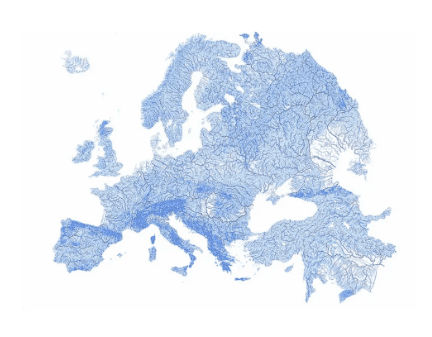
A breakthrough emerging from Mathilde Puche’s PhD research is opening new perspectives for hydrological modelling in the context of climate change and non-stationary hydrological regimes.
Conducted at Hydroclimat and the CNRS ESPACE Laboratory (Université Côte d’Azur), Mathilde Puche’s PhD thesis, entitled “Towards flexible and operational hydrological modelling for streamflow simulation: optimization and comparison of process-based and Deep Learning approaches”, represents a major contribution to digital hydroclimatology.
This research now provides the scientific foundation for the new operational LSTM model deployed by Hydroclimat for hydrological modelling.
In this article, we review the main scientific and technological advances arising from this work and how they improve our ability to simulate streamflow under climate change and non-stationary hydrological conditions.
LSTM (Long Short-Term Memory) networks are particularly well suited to modelling hydrological systems. Their main strength lies in their ability to capture long-term and non-linear dependencies within time series, which are characteristic of hydrological processes.
Unlike traditional process-based hydrological models such as SWAT or the GR family of models, LSTMs:
Results presented in Chapter 5 of Mathilde Puche’s thesis show particularly robust performance:
These results demonstrate that a properly trained LSTM can learn implicit hydrological dynamics, opening new perspectives for hydrological modelling in a changing climate.
The implementation deployed by Hydroclimat is based on the rigorous methodological choices presented in the PhD manuscript.
First, the model relies on a deliberately simple yet optimized architecture. The research shows that a standard LSTM architecture with a single hidden layer and a tuned number of units provides an excellent compromise between predictive performance and computational cost.
This approach often proves more effective than more complex architectures such as multi-layer LSTMs, Bi-LSTMs, or CNN-LSTMs, which increase complexity without consistently improving performance.
Advanced hyperparameter tuning was also implemented to optimize model behaviour, including:
This fine-tuning enables the model to accurately reproduce a wide variety of hydrological regimes, including:
These architectural and optimization choices are key contributors to the model’s robustness and adaptability across diverse watershed dynamics.
One of the main challenges of deep learning-based hydrological models is their ability to generalize across both time and space.
In the thesis, this capability is assessed through three learning tasks:
Temporal Induction (TI)
The model predicts one period based on another period within the same catchments, evaluating temporal generalization.
Spatial Induction (SI)
The model predicts streamflow in catchments that were not included in the training dataset.
Spatio-Temporal Induction (STI)
The model must simultaneously generalize across both space and time by predicting new periods in previously unseen catchments.
The results are particularly encouraging:
These findings show that a properly trained LSTM can learn transferable hydrological dynamics across catchments, paving the way for more scalable and generalizable hydrological modelling.
This represents a major shift from basin-by-basin calibration toward large-scale hydrological learning.
The model’s robustness to climate anomalies is a central aspect of the research.
Simulation experiments were conducted for years with contrasting climate conditions, including:
The results reveal clear differences between modelling approaches.
Under hotter and drier conditions, the SWAT model tends to significantly overestimate streamflow, sometimes producing unrealistic hydrographs.
In contrast, the LSTM model maintains stable accuracy, particularly for low-flow simulations, which are critical for water resource management.
The model also reproduces complex hydrological dynamics more accurately, including karst responses and seasonal variations.
In a context of climate change and hydrological non-stationarity, this robustness represents a major advantage for adaptation strategies and water management.
Beginning in 2026, Hydroclimat is deploying an optimized operational LSTM engine directly derived from this PhD research.
The system is based on:
The model is now fully integrated into Hydroclimat’s operational workflow dedicated to hydrological risk analysis and modelling.
This technological advancement enables:
This innovation strengthens the role of hydrological intelligence at the core of Hydroclimat’s solutions for anticipating hydrological risks and supporting climate adaptation.
The integration of the LSTM model strengthens several components of Hydroclimat’s analytical tools, including:
This methodological contribution improves both simulation accuracy and the robustness of future-oriented analyses, particularly under climate change and non-stationary hydrological conditions.
Hydrological modelling is therefore entering a new phase: large-scale hydrological learning capable of simultaneously leveraging climate, hydrological, and territorial data.
Mathilde Puche’s research demonstrates that LSTM-based approaches are no longer simply an alternative to traditional hydrological models.
They are progressively becoming a new benchmark for hydrological modelling, combining predictive accuracy, computational efficiency, and robustness under future climate conditions.
At Hydroclimat, we are proud to transform these scientific advances into operational solutions that help anticipate hydrological risks and support climate adaptation strategies for territories and water managers.
LSTM (Long Short-Term Memory) models are particularly well suited for hydrological modelling because they can learn complex and non-linear relationships from climate and hydrological data. Unlike traditional hydrological models, they effectively capture long-term temporal dependencies, improving streamflow simulation under changing climate conditions and non-stationary hydrological regimes.
Deep learning improves streamflow simulations by learning hydrological dynamics directly from observational data. LSTM models offer strong generalization capabilities, require fewer assumptions about watershed processes, and can be deployed at large scales. They are increasingly used for streamflow forecasting, hydrological risk assessment, and water resource management.
LSTM models can maintain robust performance under unusual climate conditions such as droughts, heatwaves, and non-stationary hydrological regimes. This capability improves future hydrological projections, flood and drought risk assessments, and the development of climate adaptation strategies for water managers, infrastructure operators, and local authorities.
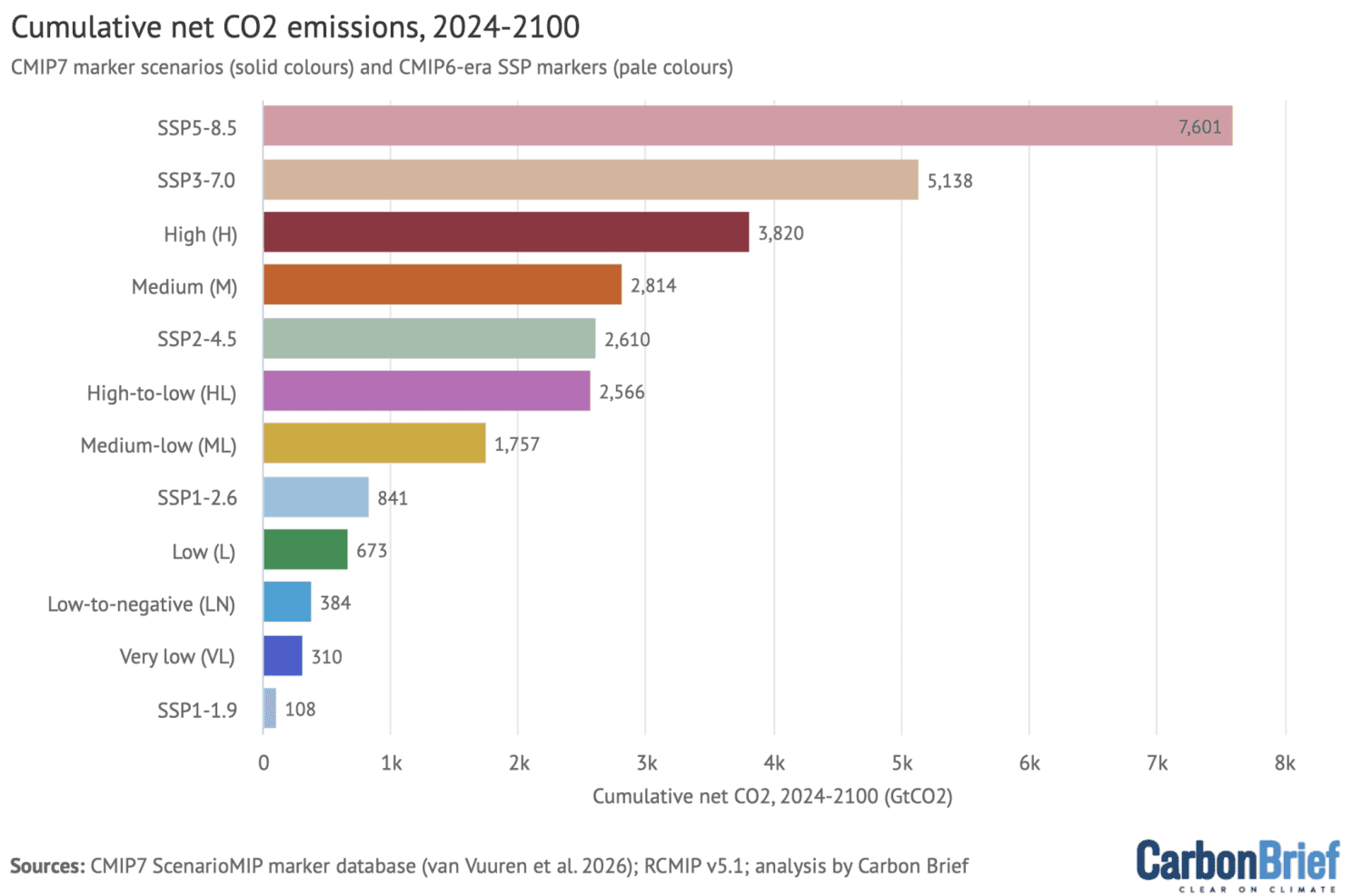
New CMIP7 scenarios: what climate futures can we expect by 2100?
9/21/2026
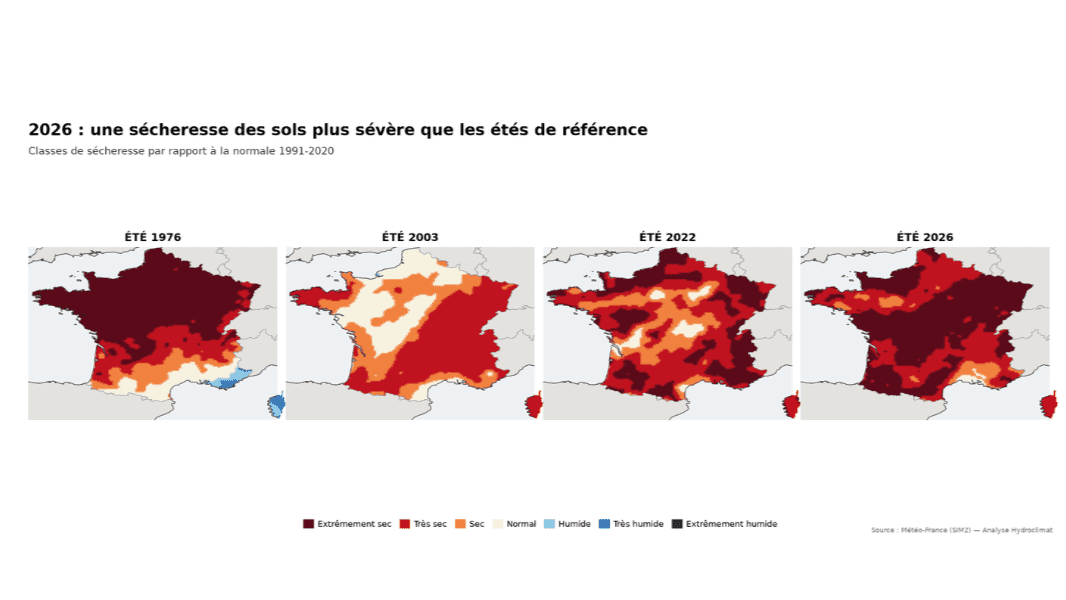
Soil drought: where does summer 2026 really stand?
9/10/2026
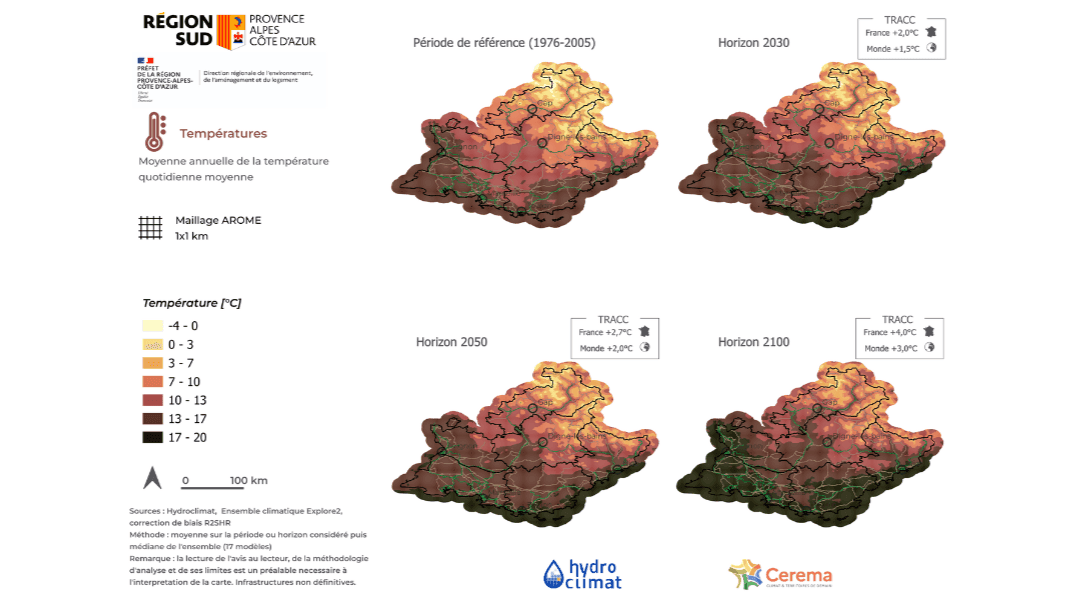
Adapting Regional Transport Networks to Climate Change: From Assessment to Action
9/3/2026
Data center: integrating future climate into site selection
8/24/2026
How much will climate risk really cost?
6/29/2026
