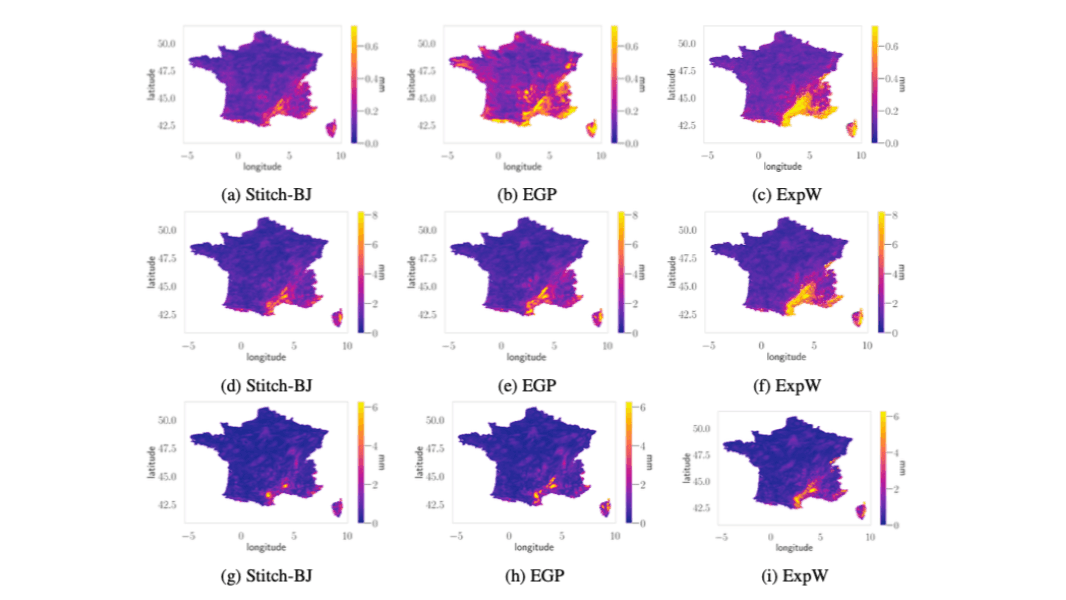
Improving the reliability of climate data used in impact studies, hydrological modelling, and climate risk assessment has become a major challenge for climate science.
Conducted at Université Côte d’Azur and the J.A. Dieudonné Laboratory (CNRS), in collaboration with Hydroclimat, the PhD thesis of Philippe Ear, entitled "Distributional models for daily precipitation bias correction: a focus on extremal events", proposes an innovative statistical approach to improve daily precipitation bias correction, with a particular focus on the representation of extreme events.
This research addresses a major scientific challenge: producing statistically consistent precipitation series from climate simulations in order to reliably support impact models and climate risk analyses.
Indeed, climate models often exhibit systematic biases in precipitation estimates, particularly for rare and intense events. Yet these extremes play a critical role in assessing flood risk, drought risk, and water resource management.
The thesis introduces new statistical distribution models that improve bias correction while providing a more accurate representation of distribution tails, where extreme events occur.
In this article, we review the main scientific contributions of this research and show how these developments improve the statistical representation of extreme precipitation in bias-corrected climate datasets, opening new opportunities for impact studies and operational applications.
Climate models now play a central role in many forward-looking analyses, particularly in hydrology, agriculture, energy, and insurance. They enable the simulation of future climate conditions and help anticipate the impacts of climate change on territories and infrastructure.
However, despite significant improvements over recent decades, climate simulations often exhibit systematic biases when compared with observations. These biases may affect various statistical properties of climate variables, including mean values, temporal variability, and the frequency and intensity of extreme events.
Daily precipitation is particularly challenging because its statistical distribution presents several characteristics that are difficult for climate models to reproduce accurately:
If left uncorrected, these biases can lead to inaccurate estimates of hydrological risks. This issue is particularly evident in analyses related to floods, extreme rainfall events, and water resource management.
Bias correction therefore represents an essential post-processing step to produce climate datasets that are statistically consistent with observations and suitable for impact models and climate risk assessments.
Several statistical techniques are currently used to correct biases in climate simulations. The most common include:
These methods have significantly improved climate impact studies by enhancing certain statistical properties of simulated series.
However, they often rely on simplifying assumptions, particularly the idea that the statistical relationship between climate simulations and observations remains stationary over time.
In a changing climate, this assumption may become problematic. Precipitation distributions can evolve, particularly regarding the frequency and intensity of extreme events, which are precisely the events most relevant for climate risk assessment.
Furthermore, these methods often struggle to accurately represent the tails of distributions, where rare but highly intense events occur.
Yet these extremes are critical for evaluating risks such as flooding, flash floods, and intense rainfall events.
This raises a key question:
How can we correct climate simulation biases while preserving a realistic representation of extreme events?
This is precisely the challenge addressed by Philippe Ear’s thesis through a statistical framework specifically designed for daily precipitation and extreme events.
The main methodological contribution of the thesis is the development of an approach called Stitch-BJ (Stitch Berk-Jones).
The method is based on a simple but innovative idea: combining multiple statistical distributions to better represent the full precipitation distribution.
In this framework, a primary distribution based on the Extended Generalized Pareto (EGP) distribution is used to model overall precipitation behaviour. This distribution is particularly well suited to variables with heavy tails, such as daily rainfall.
However, certain portions of the distribution can be difficult to represent using a single statistical model.
When discrepancies arise between the model and observations, alternative distributions can be locally introduced to improve the statistical fit.
Transitions between distributions are determined automatically using the Berk-Jones statistical test, which identifies segments of the distribution where the fit is insufficient.
This stitching approach offers several important advantages:
As a result, the method reproduces the statistical structure of daily precipitation more accurately while maintaining a robust representation of extreme events, which are often poorly captured by traditional bias correction techniques.
Beyond the distribution model itself, operational precipitation bias correction must account for several structural characteristics of climate time series.
The first concerns the frequency of dry days, a key aspect of precipitation statistics.
Climate simulations and observations often differ significantly in the proportion of dry days, which can affect the overall precipitation distribution.
To address this issue, the methodology incorporates procedures designed to adjust the frequency of zero-rainfall events.
In particular, it relies on the Singularity Stochastic Removal (SSR) approach, which statistically rebalances the frequency of dry days between observations and simulations before applying distribution-based corrections.
Bias correction must also account for precipitation seasonality.
Rainfall distributions vary significantly throughout the year due to atmospheric dynamics and seasonal weather regimes.
To capture these intra-annual variations, corrections are applied using moving temporal windows, allowing model parameters to adapt to seasonal climate characteristics.
Finally, model performance is evaluated using out-of-sample validation frameworks to assess generalization capability and statistical robustness.
This step is crucial to ensure that corrections remain valid under changing climate conditions.
The evaluation of bias correction methods is a central component of the thesis.
Performance is assessed using climate indicators specifically designed for extreme precipitation and widely used in climatology and hydrology.
These indicators include:
These metrics assess the ability of correction methods to accurately reproduce the frequency and intensity of extreme events.
Results show that flexible distributional approaches such as Stitch-BJ significantly improve the statistical representation of extremes while maintaining overall consistency across the precipitation distribution.
These methodological advances are particularly relevant for:
Philippe Ear’s work improves a critical component of the climate modelling chain: the quality of climate data used to characterize hazards and assess climate risk exposure.
By introducing a more flexible statistical framework for daily precipitation bias correction, this research improves the representation of extreme events, which are essential for evaluating hydro-meteorological hazards.
These advances pave the way for the production of more reliable bias-corrected climate datasets capable of supporting:
More broadly, this work highlights the growing importance of advanced statistical approaches at the intersection of climatology, applied mathematics, and data science.
By improving the statistical representation of extreme precipitation, this research contributes to more reliable climate analyses and better-informed climate adaptation decisions.
Philippe Ear’s thesis provides an important methodological contribution to climate precipitation bias correction.
By combining extreme value theory, distributional modelling, and advanced statistical testing, this research opens new perspectives for improving the representation of extreme events in climate datasets.
This improvement is essential because climate risk assessments in fields such as hydrology, insurance, infrastructure management, and territorial planning directly depend on the quality of climate data used to characterize hazards and exposure.
By enabling a more realistic representation of extreme precipitation, these methods contribute to producing more robust climate datasets capable of supporting:
At a time when extreme hydro-meteorological events are becoming a major challenge for territories worldwide, improving the statistical quality of climate data is a key lever for strengthening the reliability of climate analyses and decision-support tools.
This work also illustrates the growing role of advanced statistical approaches at the intersection of climatology, applied mathematics, and data science in transforming climate simulations into actionable information for climate adaptation and risk management.
Precipitation bias correction is a statistical post-processing technique used to reduce systematic errors in climate model outputs. Climate simulations often underestimate or overestimate rainfall amounts, frequencies, and intensities. Bias correction helps align climate projections with observed data, making them more reliable for hydrological modelling, climate impact studies, and climate risk assessments.
Extreme precipitation events are among the main drivers of floods, flash floods, and water-related climate risks. Accurately representing these events is essential for flood risk assessment, infrastructure design, water resource management, and climate adaptation planning. Poor representation of extremes can lead to significant underestimation of future climate risks.
Advanced bias correction methods improve the statistical representation of both average rainfall and extreme precipitation events. This leads to more reliable climate datasets that can be used to strengthen hydrological models, climate risk assessments, flood hazard analyses, insurance risk modelling, and long-term adaptation strategies under climate change.
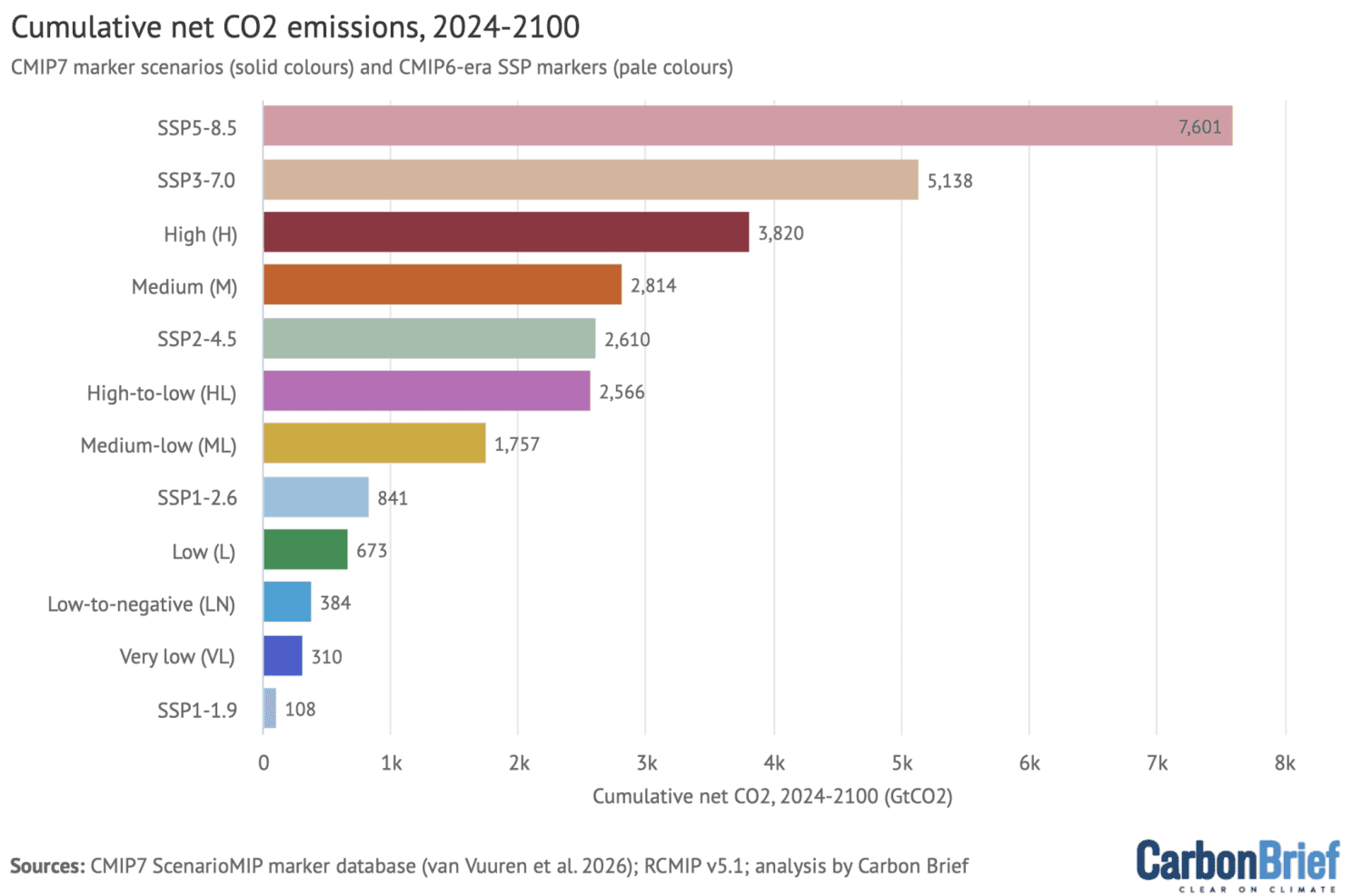
New CMIP7 scenarios: what climate futures can we expect by 2100?
9/21/2026
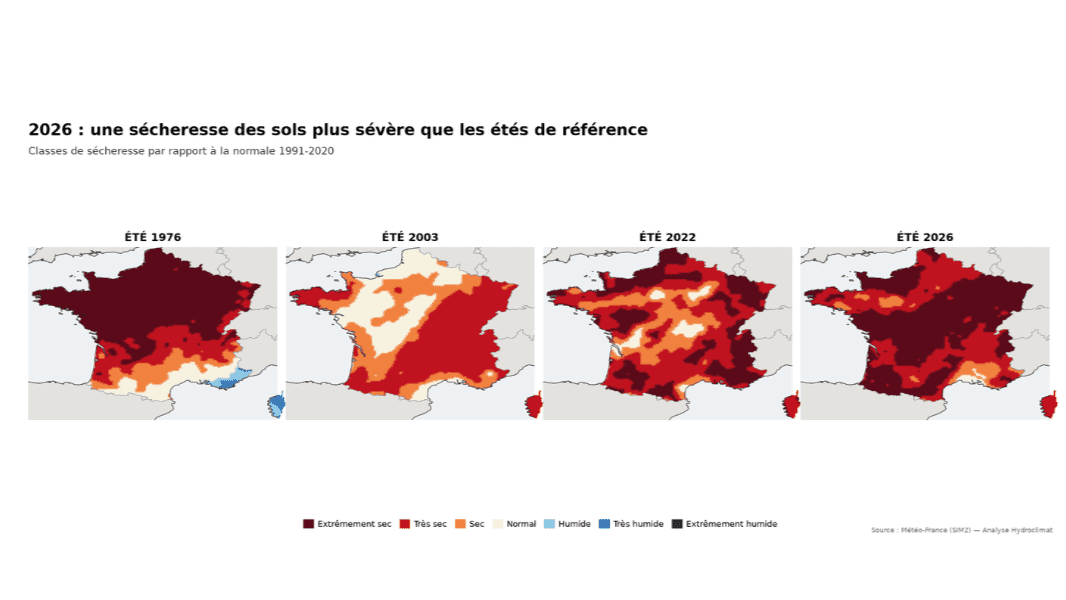
Soil drought: where does summer 2026 really stand?
9/10/2026
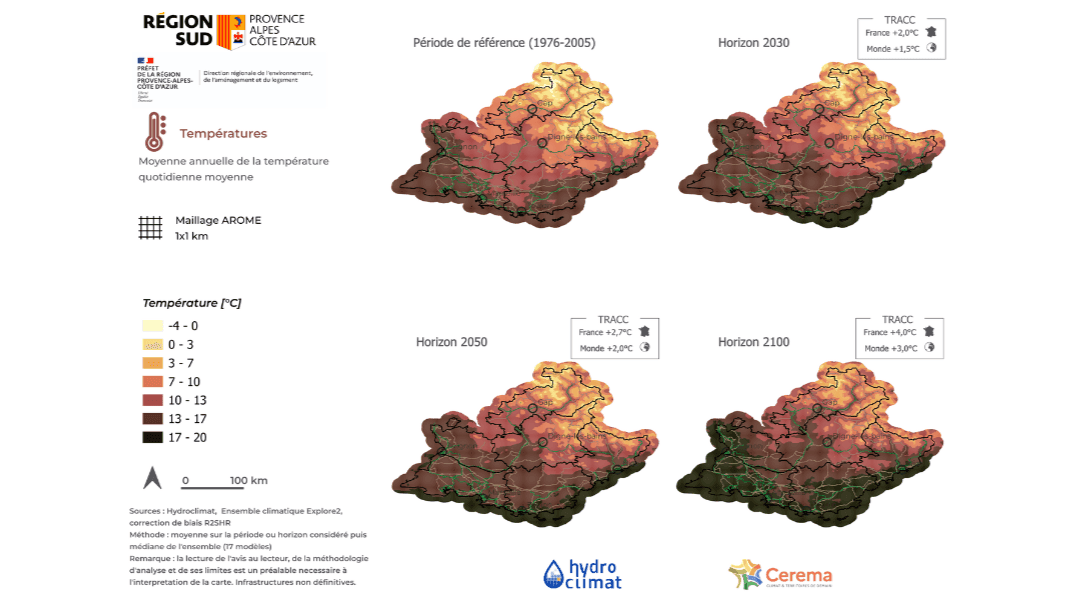
Adapting Regional Transport Networks to Climate Change: From Assessment to Action
9/3/2026

Data center: integrating future climate into site selection
8/24/2026
How much will climate risk really cost?
6/29/2026
